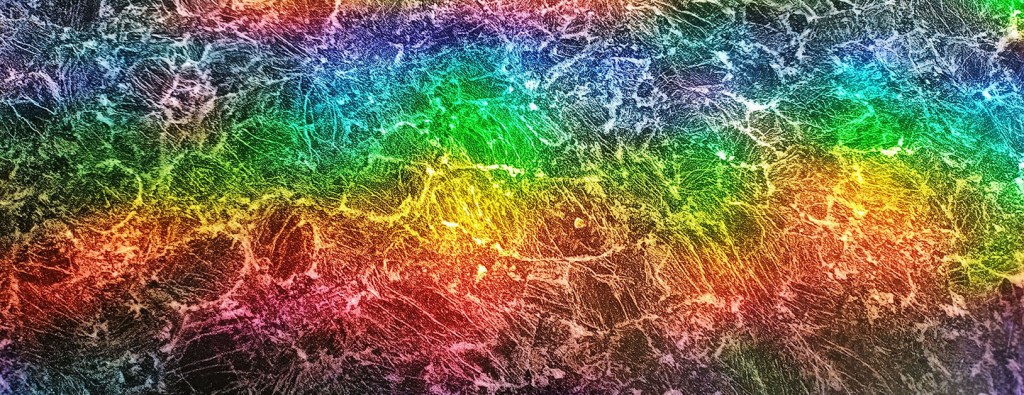
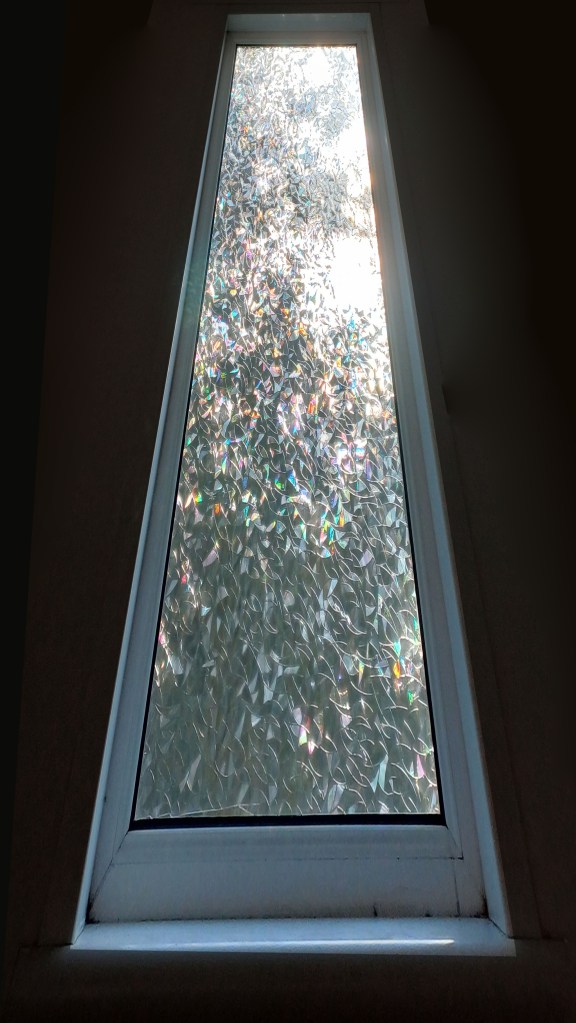
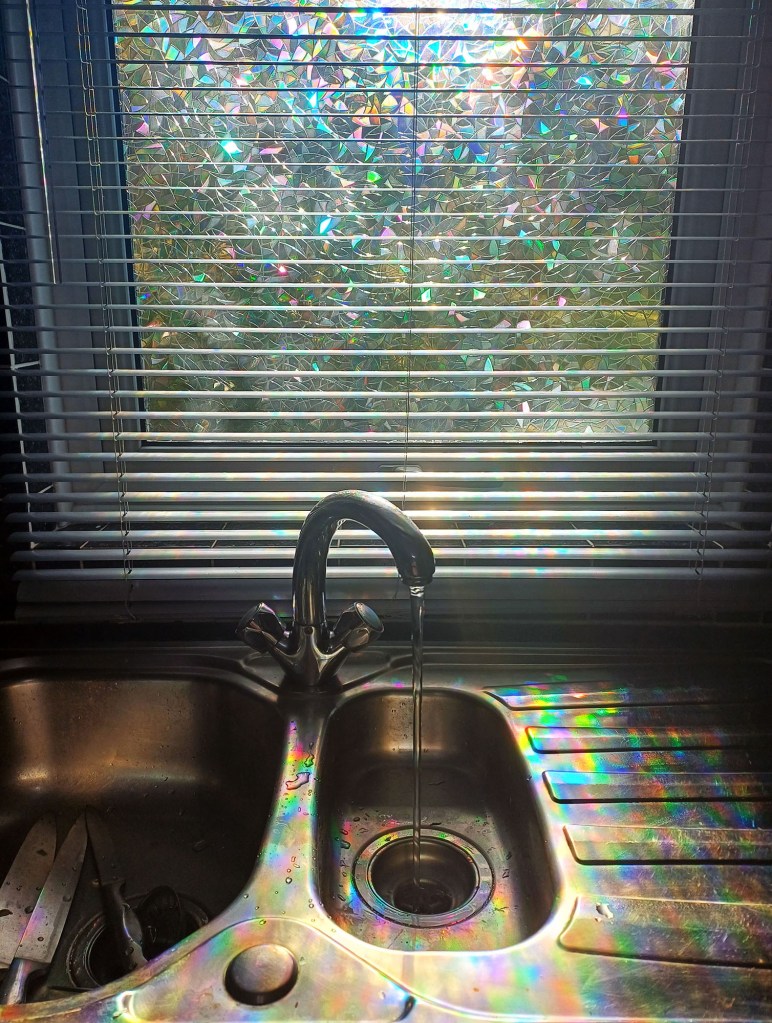
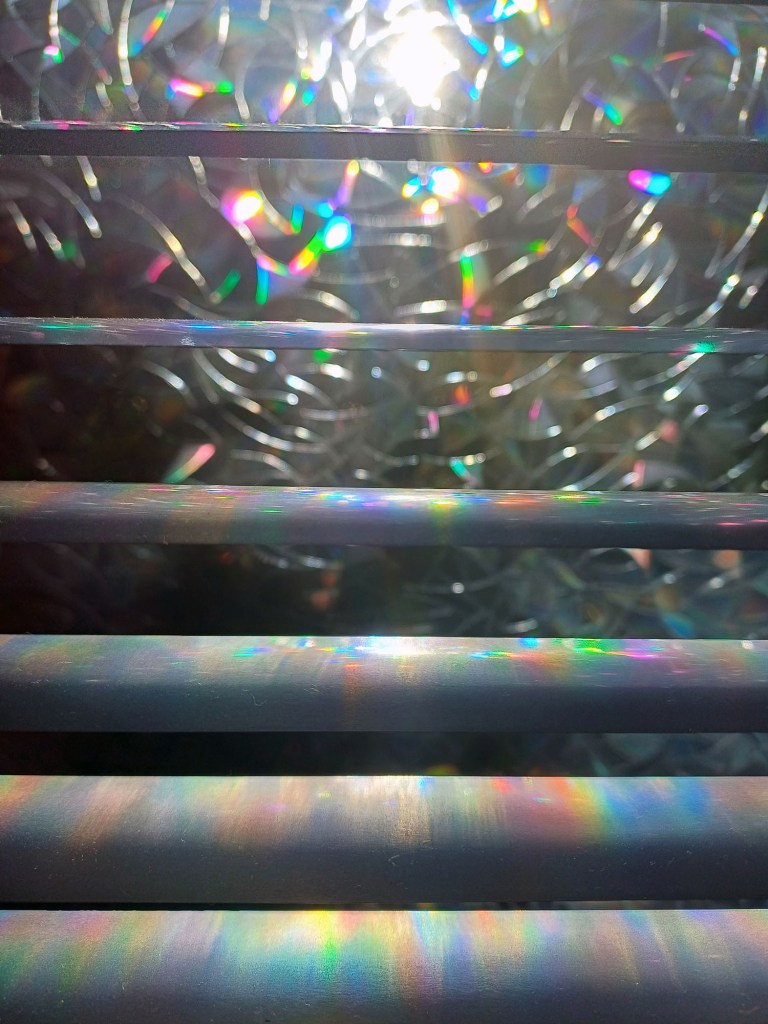
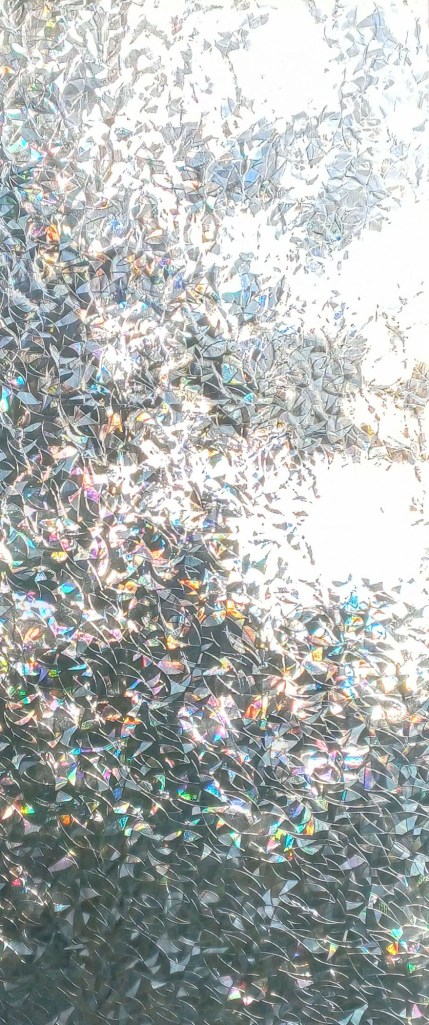
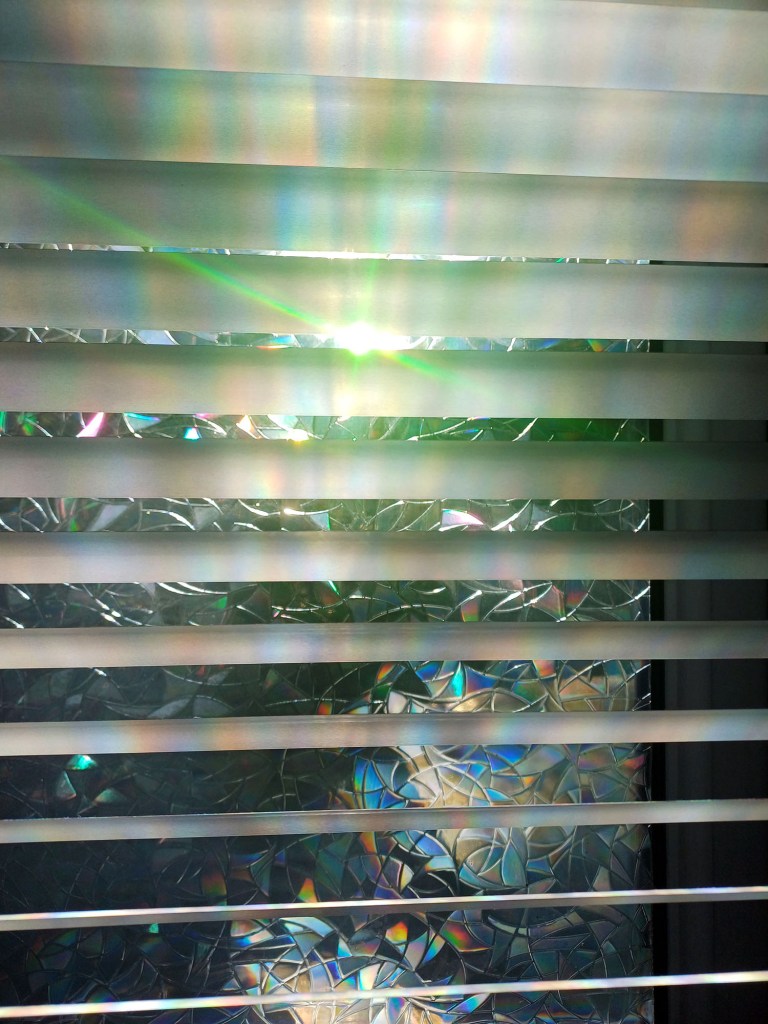
Rainbows have always fascinated me. They appear only under the right conditions, and I am drawn to them like a moth to a flame. So, when I discovered a plastic window film that created rainbows, I bought it immediately. Over the following months I became mesmerised as shifting bands of colour moved across my kitchen floor throughout the day.
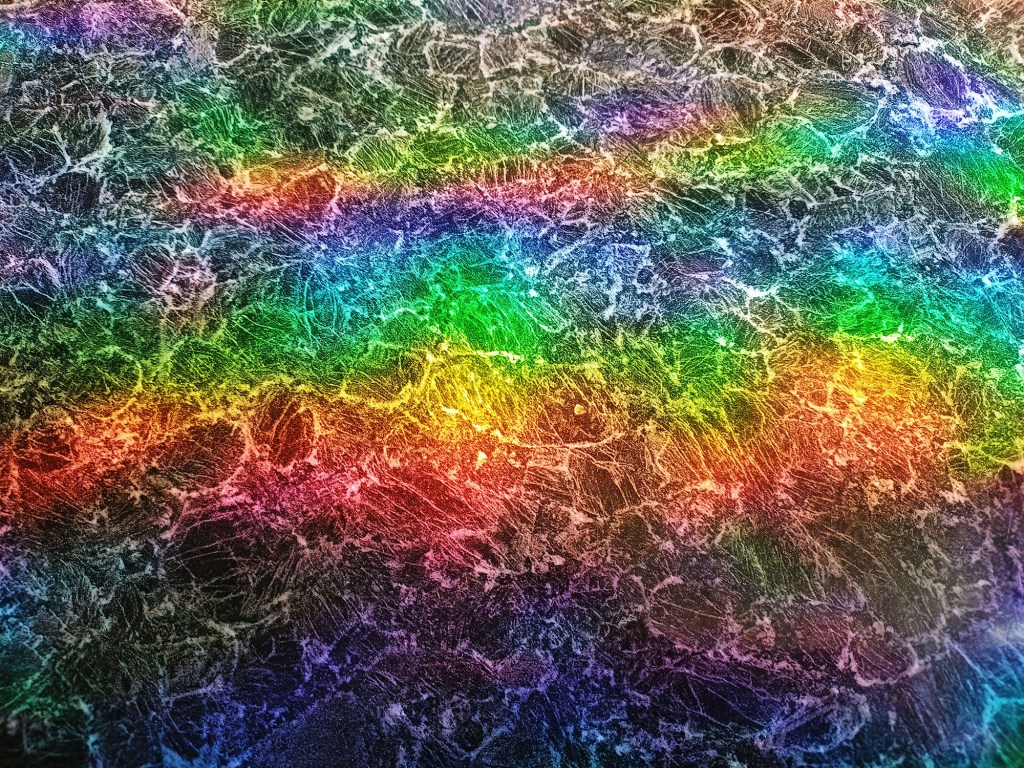
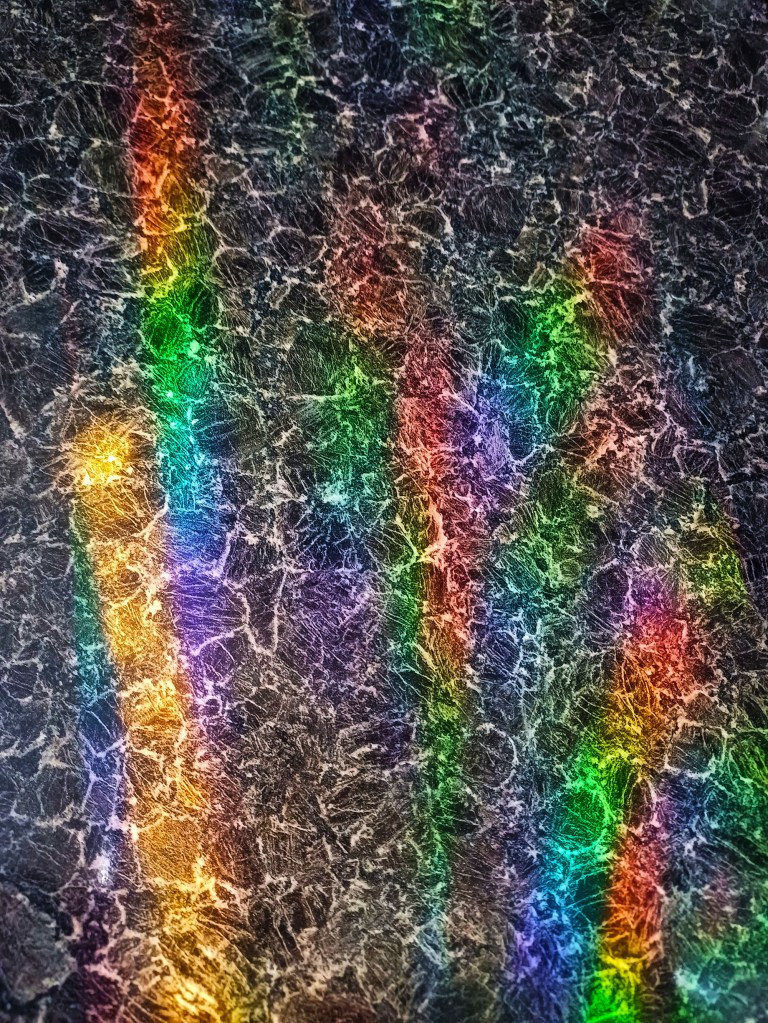
This coincided with a period on the course when we were concentrating heavily on photography. Lines, shapes and light had become central to the way I was observing the world, so I naturally began photographing the way the rainbows interacted with different surfaces around my home.
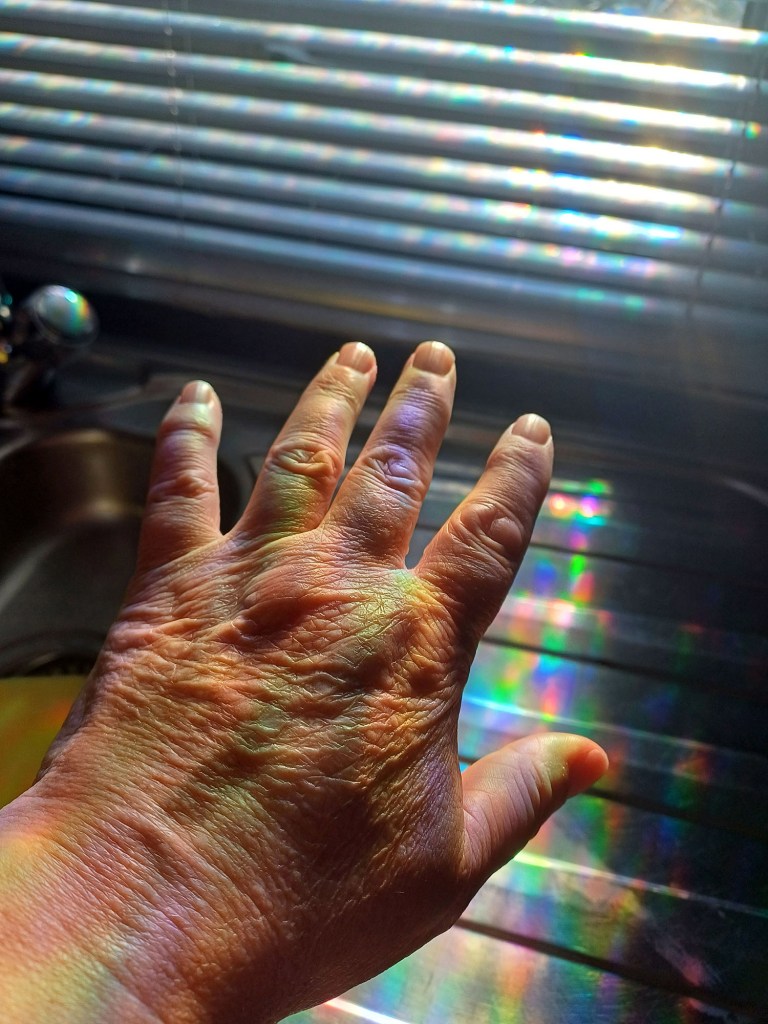
One image in particular changed the way I looked at myself. When I saw the rainbow light falling across my hand, the colours transformed what I had previously seen as simply an ageing hand. The combination of beauty and age created an unexpected harmony, encouraging me to study details I had never really noticed before. After all, who truly stops to look at their own hand?
The same idea appears in the photograph of the knives in the sink. The knives themselves are almost incidental, yet they remain an underlying presence. The splashes of multicoloured light distract the eye from their potential danger, while the interplay of light and shadow softens their harshness, making something threatening appear unexpectedly beautiful.
These photographs taught me that light has the power to change not only the appearance of an object but also the way we perceive it. By simply altering the light, familiar subjects became something worth studying, revealing beauty in places I would normally overlook. More importantly, they reminded me that photography is not always about finding extraordinary subjects, but about learning to see the ordinary in extraordinary ways.
 Cheryl Nelson Costumes
Leave a comment