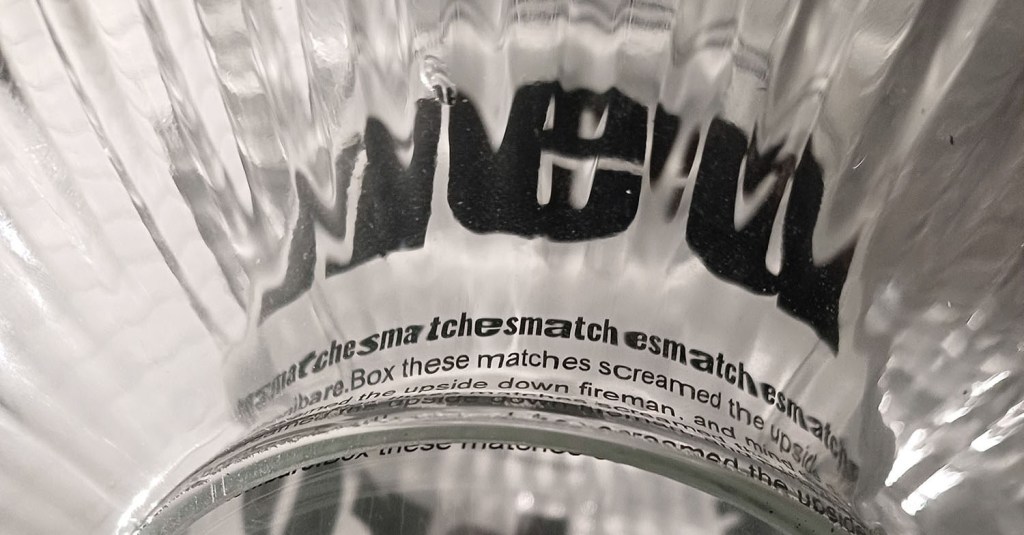
I am not naturally someone who enjoys collaborative work, but for this exercise we were required to work in pairs. The concept was simple: in a dark room, use words printed onto acetate and project them onto different surfaces using the light from a mobile phone. It is an activity that really needs two people, one to hold and manipulate the acetate while the other takes the photographs. Fortunately, Jenny and I worked well together, which allowed us to experiment with a wide range of ideas.
Being old enough to remember sending rolls of film away to be developed, I have a real appreciation for digital photography. Not only is it far more convenient, but storing thousands of digital images is much easier than dealing with piles of printed photographs that stick together or shelves full of bulky photo albums. It also makes the editing process far more accessible, and there is a certain freedom in knowing that every photograph you take does not carry a monetary cost.
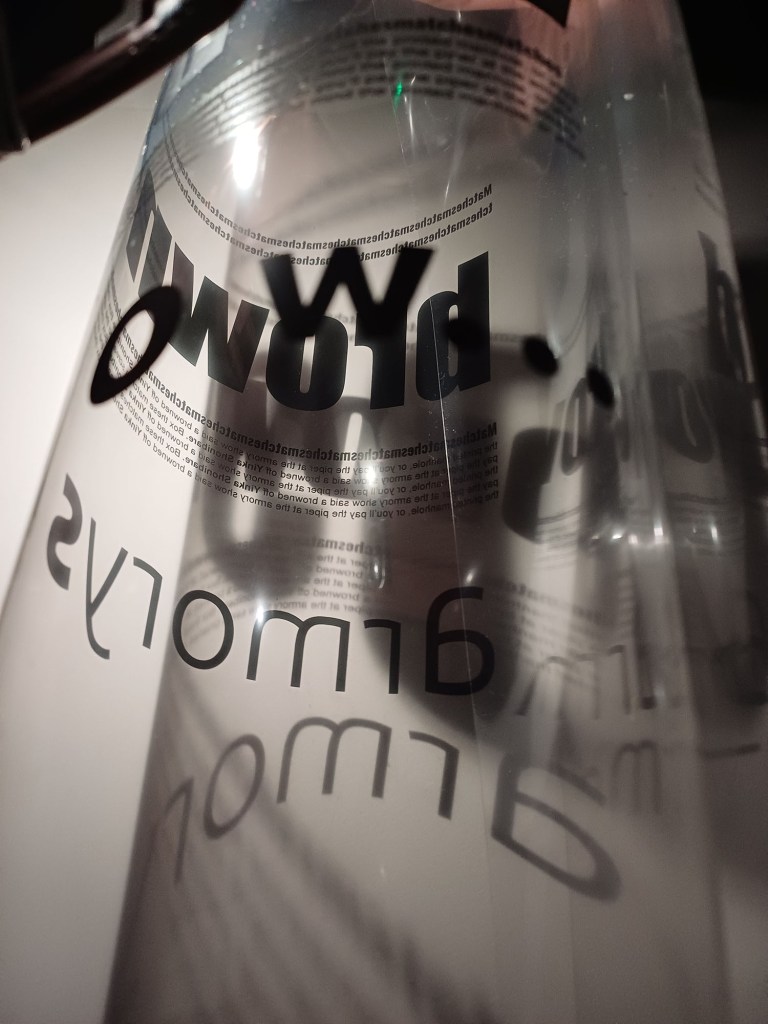
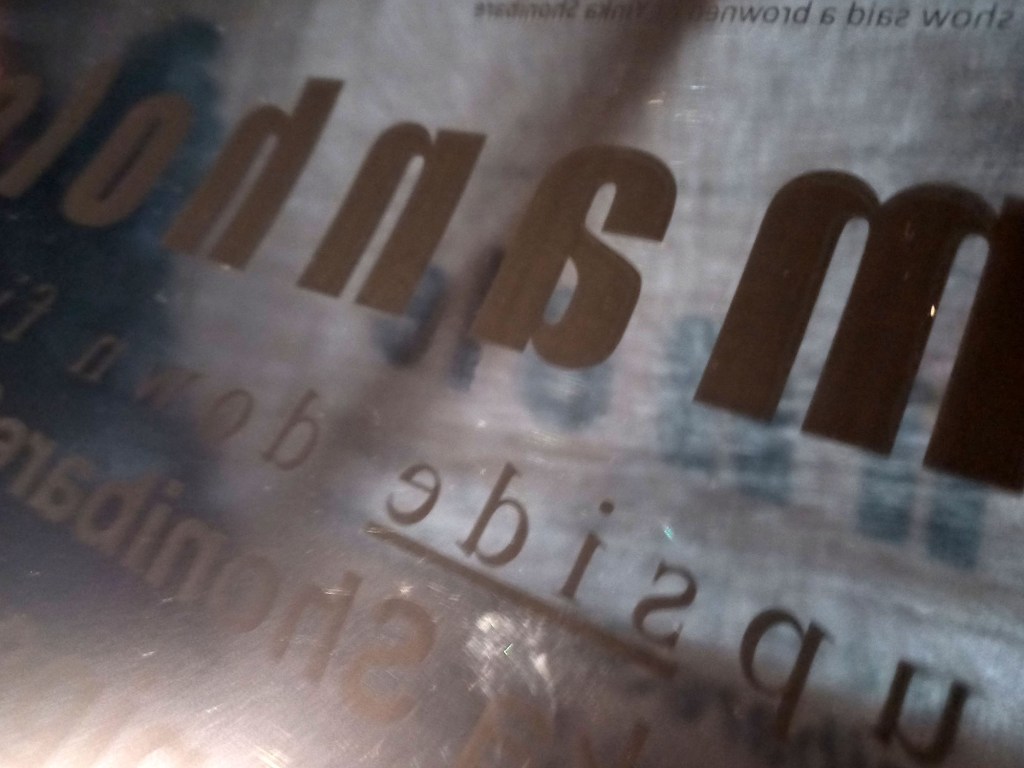
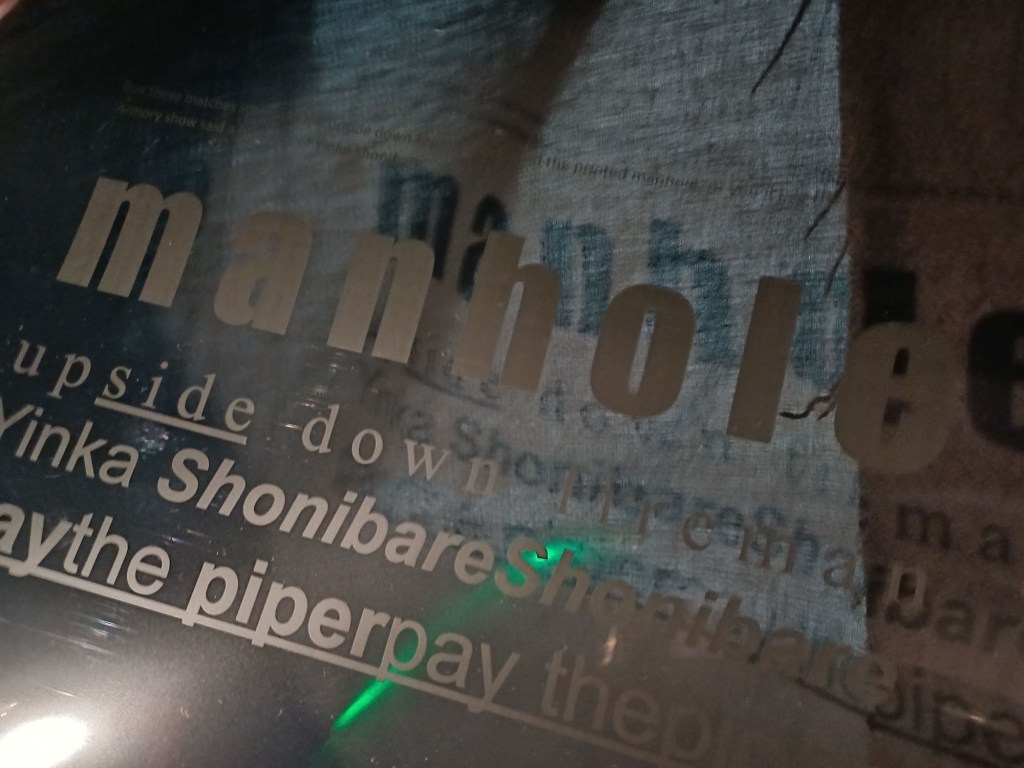
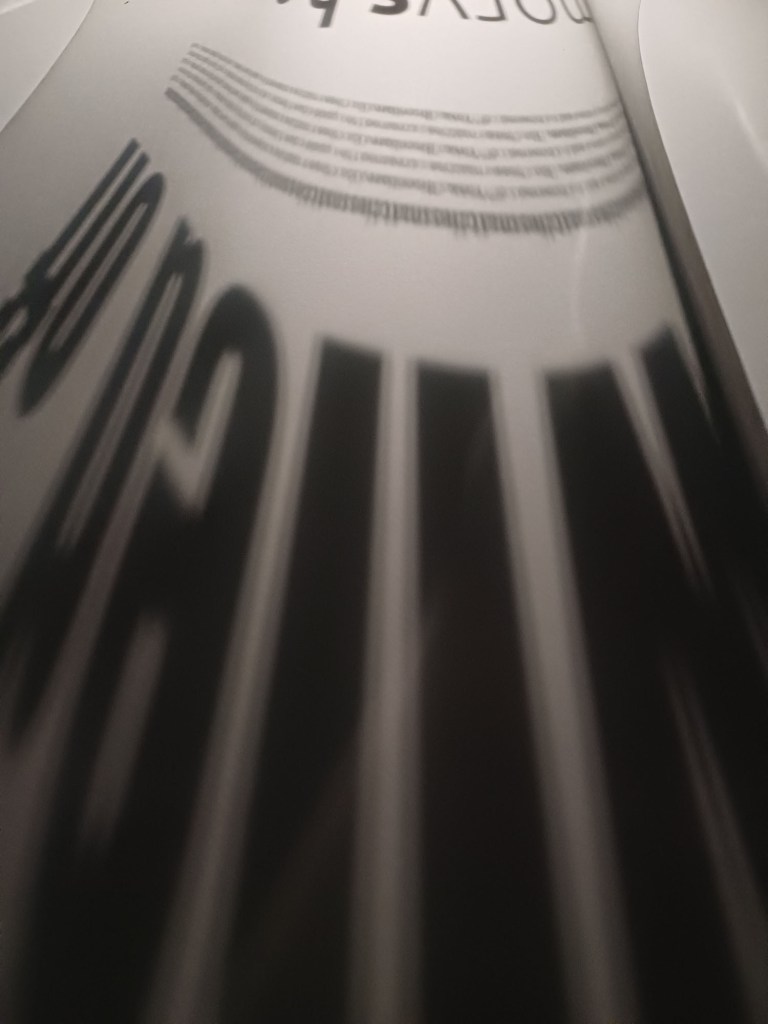
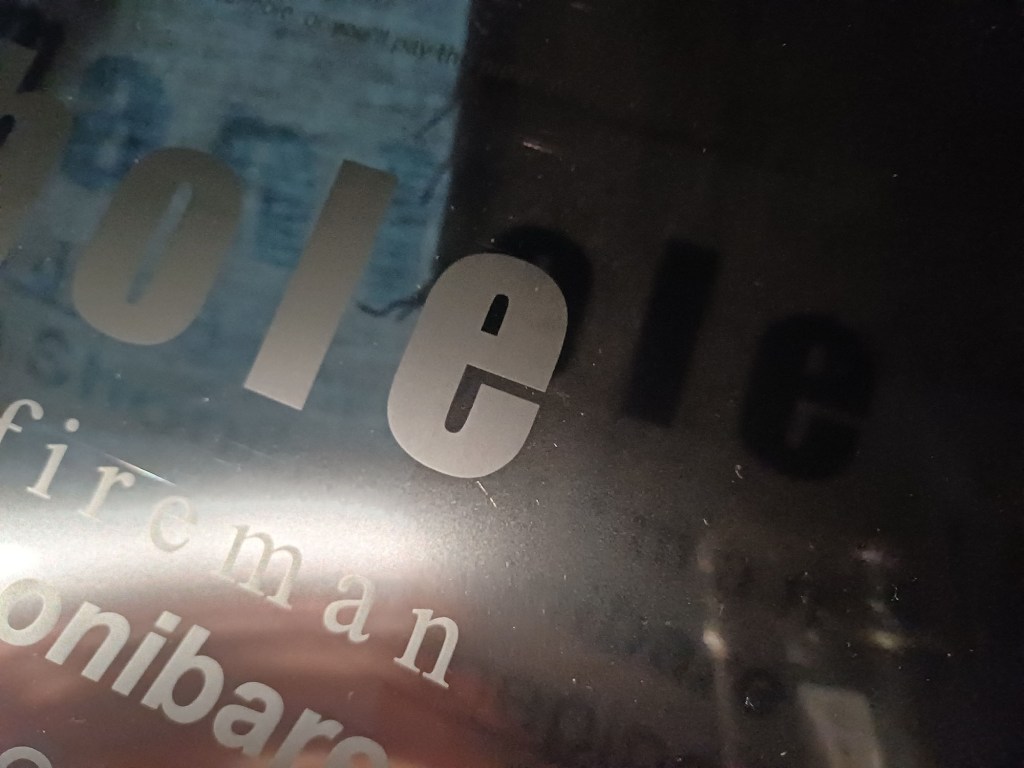
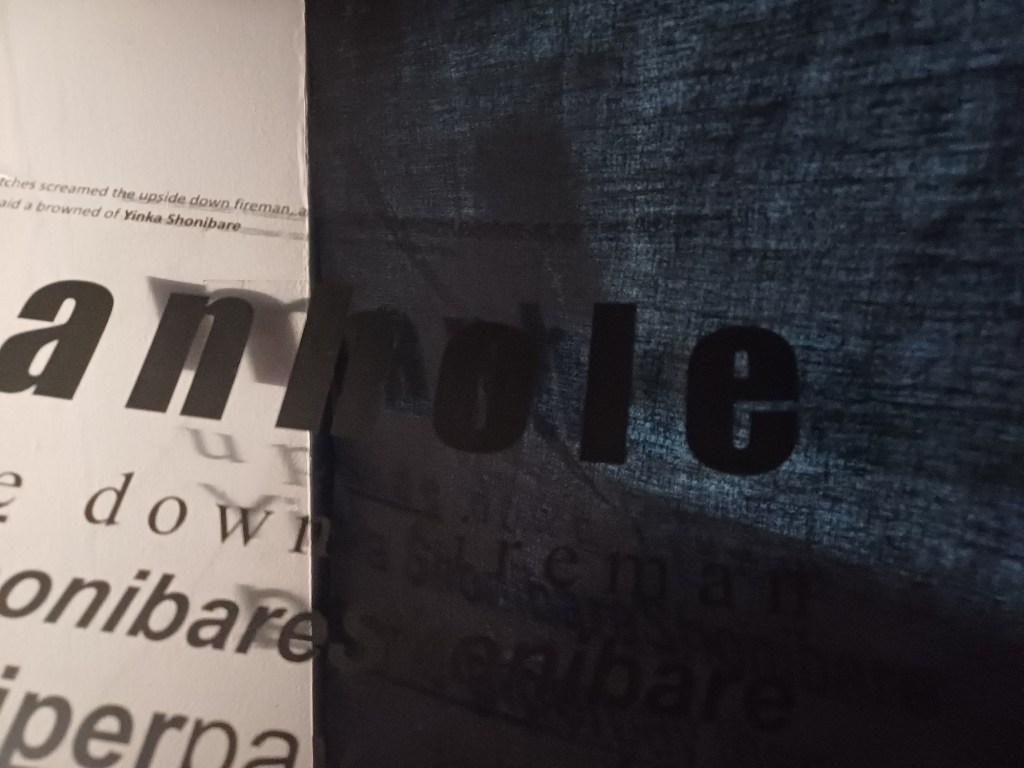
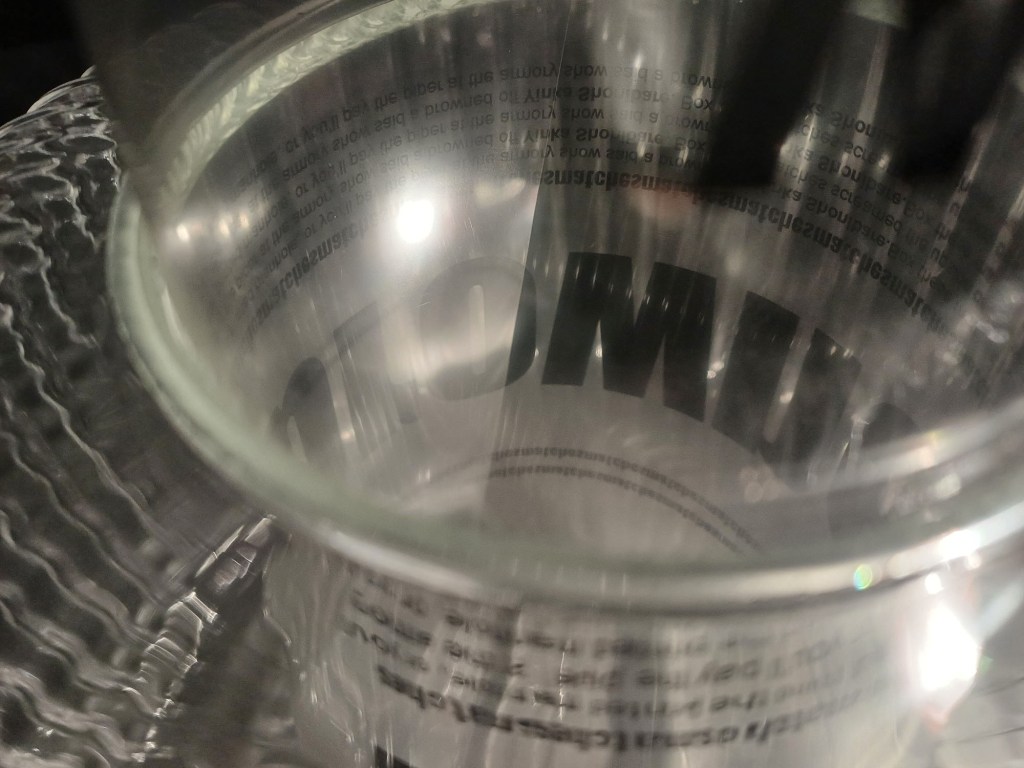
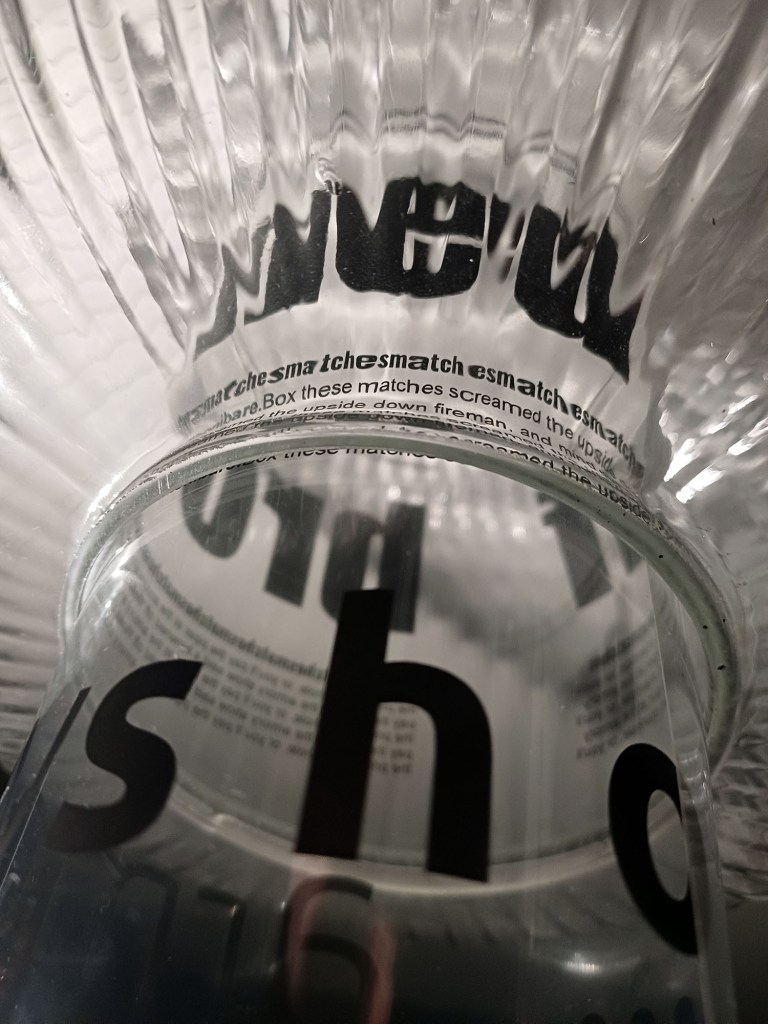
We projected the words onto fabric, glass, walls, and the floor. The more textured the surface, the more interesting the results became. By bending, twisting, or leaving the acetate flat, every movement created a different distortion, producing entirely new effects. From the large number of photographs we took, these are the images I found the most successful. What I found particularly fascinating was that the final photographs looked nothing like the neat printed lines on the acetate. The surfaces themselves played a significant role in transforming the projected words into something far more abstract.
One lesson we learned early on was that the words needed to be printed in reverse so they would appear the correct way around when projected. It was something we hadn’t considered initially. Perhaps leaving the text reversed would have been considered more “arty”, but at this stage of my BA (Hons) AUP Extended degree, I had not yet become comfortable enough with contemporary artistic conventions to embrace that approach.
Years of not really understanding modern art, and of being confident that I simply “knew what I liked,” were working against me. As Genesis famously put it, “I know what I like, and I like what I know.” At that point in the course, that lyric summed up my mindset rather well.

 Cheryl Nelson Costumes