We were asked to investigate topical subjects while considering them in relation to the grouping we had chosen. Our group selected “Play and Power”, which gave us a broad starting point from which to explore different interpretations of both concepts.
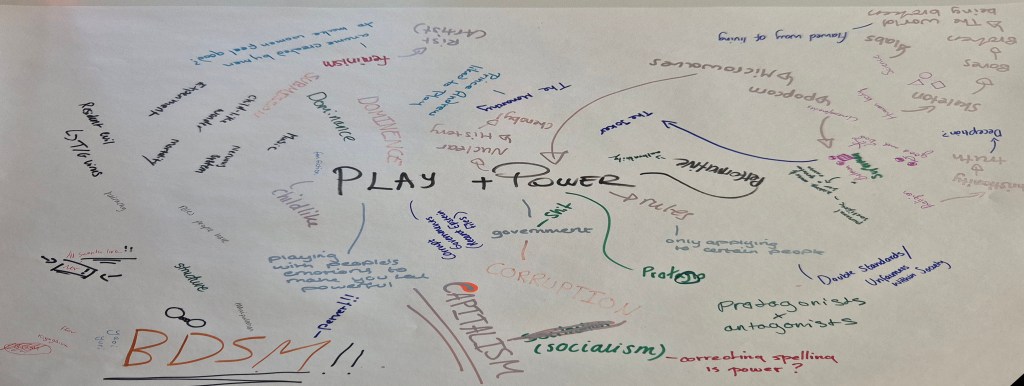
As a group, we began in the usual way by discussing what “play” and “power” meant to us. Each person contributed words and ideas to the page, some standing alone while others developed into chains of associated thoughts. This process allowed us to explore the concepts from a number of different perspectives before deciding on a subject that we felt would provide enough depth for further investigation.
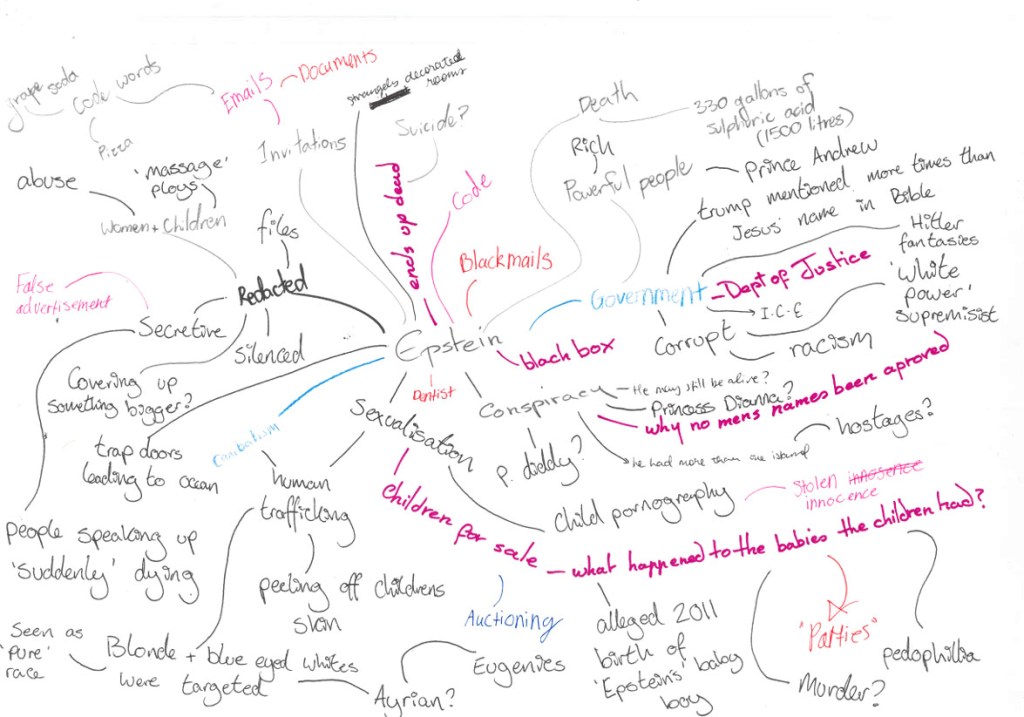
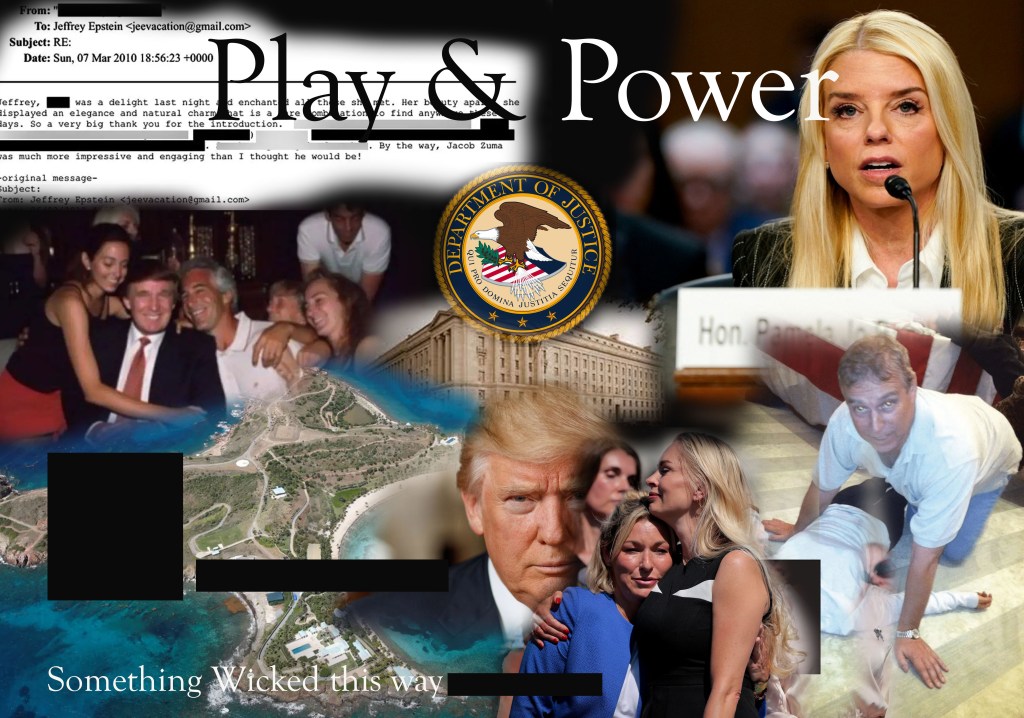
From this discussion, we decided to explore the Epstein files. At the time, the subject was receiving considerable media attention, including discussions surrounding Pamela Jo Bondi and the US Department of Justice. It was a subject that generated strong reactions within the group and one that we felt strongly about exploring.
However, translating those feelings into a form of performance art presented a significant challenge. The subject was complex, controversial and emotionally charged, and our own responses to it were equally strong. We therefore had to consider not only what we wanted to communicate, but also how we could represent such a difficult subject through performance without reducing it to a simplistic message.
This became an important part of the creative process. Rather than simply responding to the subject emotionally, we had to step back and consider how the themes of play and power could provide a framework through which we could examine it. The difficulty of finding that balance ultimately became part of the exploration itself.
In the end, we decided that a direct or literal representation of the subject would not communicate what we wanted effectively. Instead, we chose to create a symbolic video piece that allowed us to explore ideas of power, control, secrecy and manipulation without attempting to recreate the events themselves. Using symbolism gave us greater freedom to communicate our collective response while leaving the interpretation open to the viewer. This felt more appropriate for the nature of the subject and allowed the work to remain a piece of performance art rather than becoming a straightforward recreation of real events.