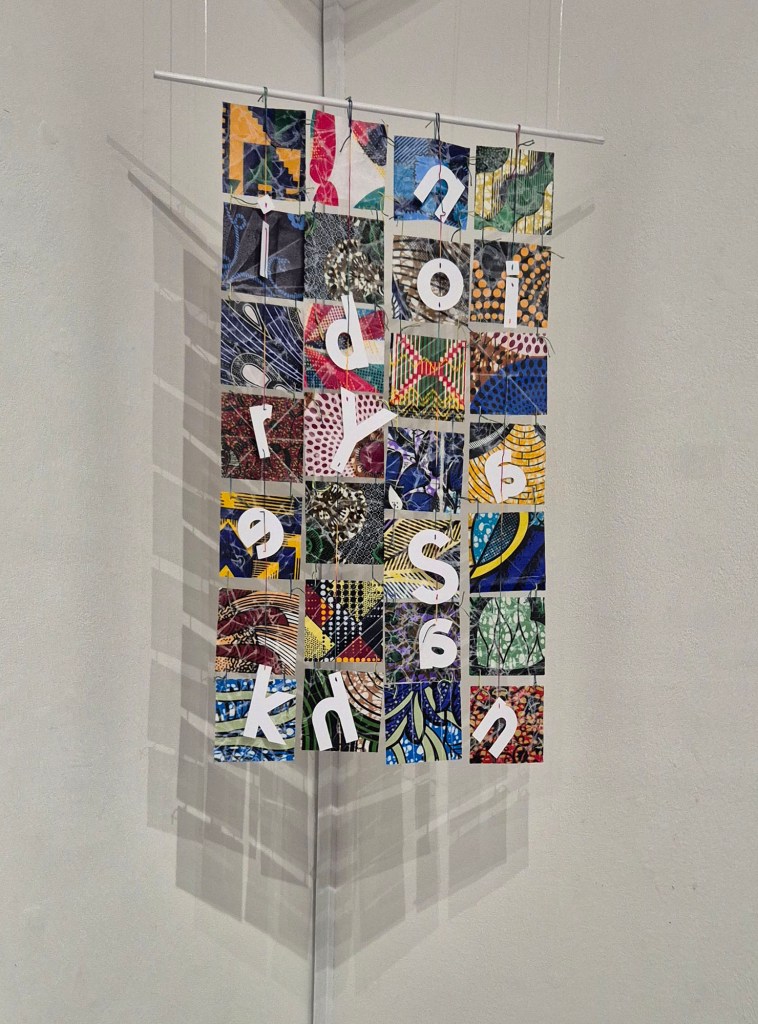
Homage to Shonibare … Cheryl Nelson … 2025
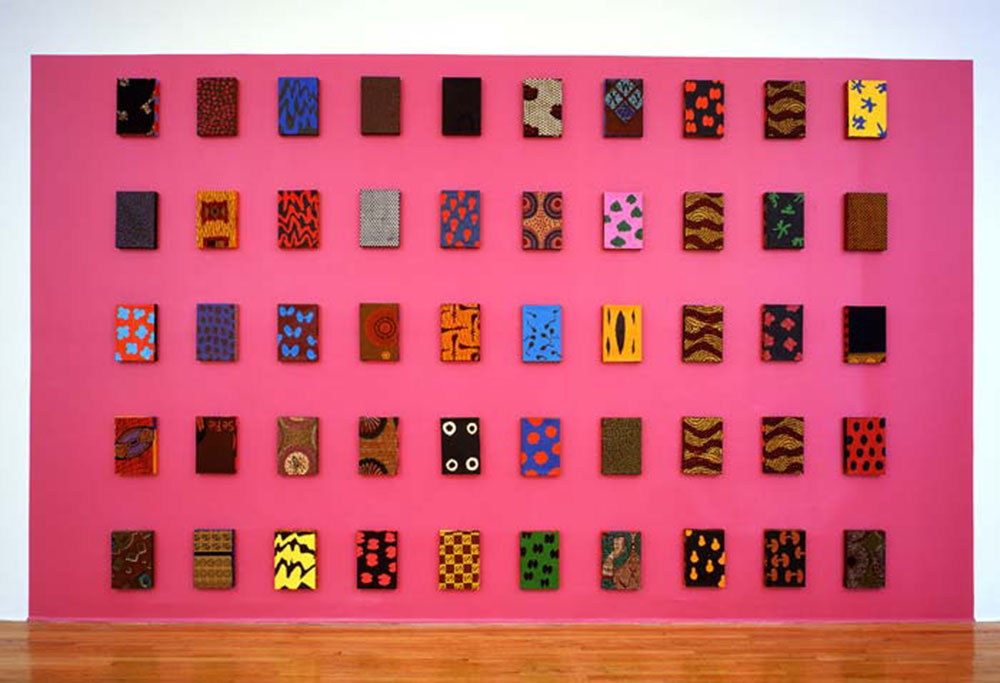
Double Dutch … Yinka Shonibare 1994
Homage to Shonibare was the final piece that Barton and Helen selected for our halfway exhibition. At the time, I had been looking closely at the work of Yinka Shonibare, and I found myself drawn to the vibrant colours of the African Dutch wax fabrics that feature so prominently in his work. His sculptures fascinated me: the plaster figures dressed in elaborate costumes, the political messages woven into each piece, and the flowing, brightly coloured sculptural waves that seemed to be full of movement.
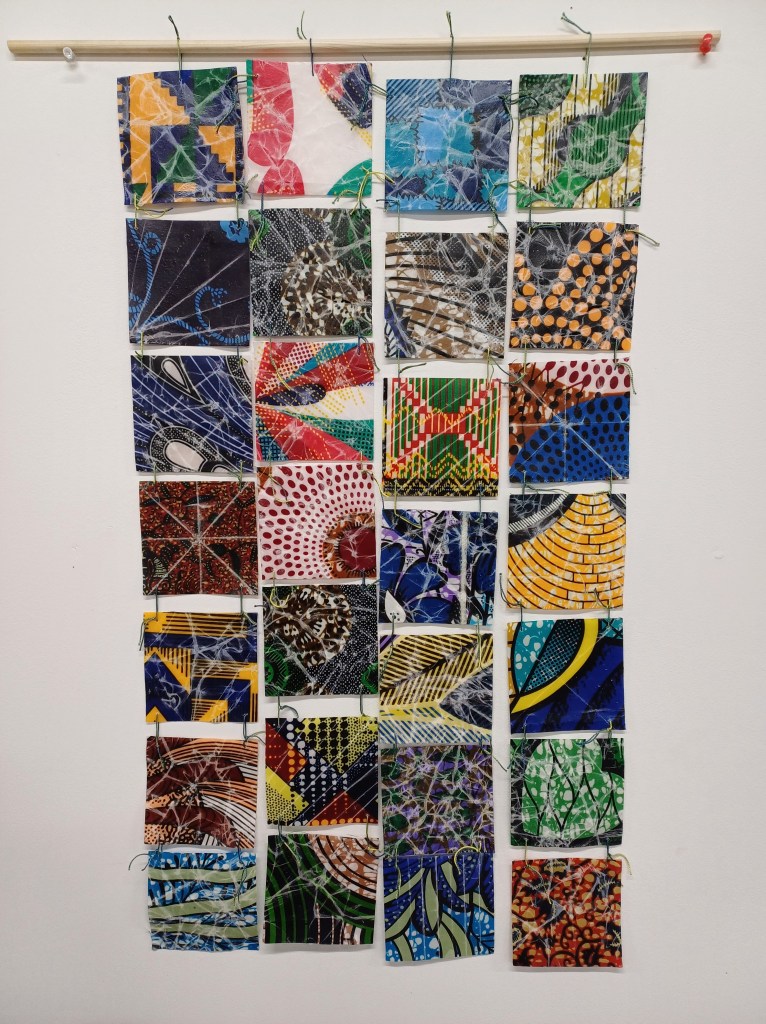
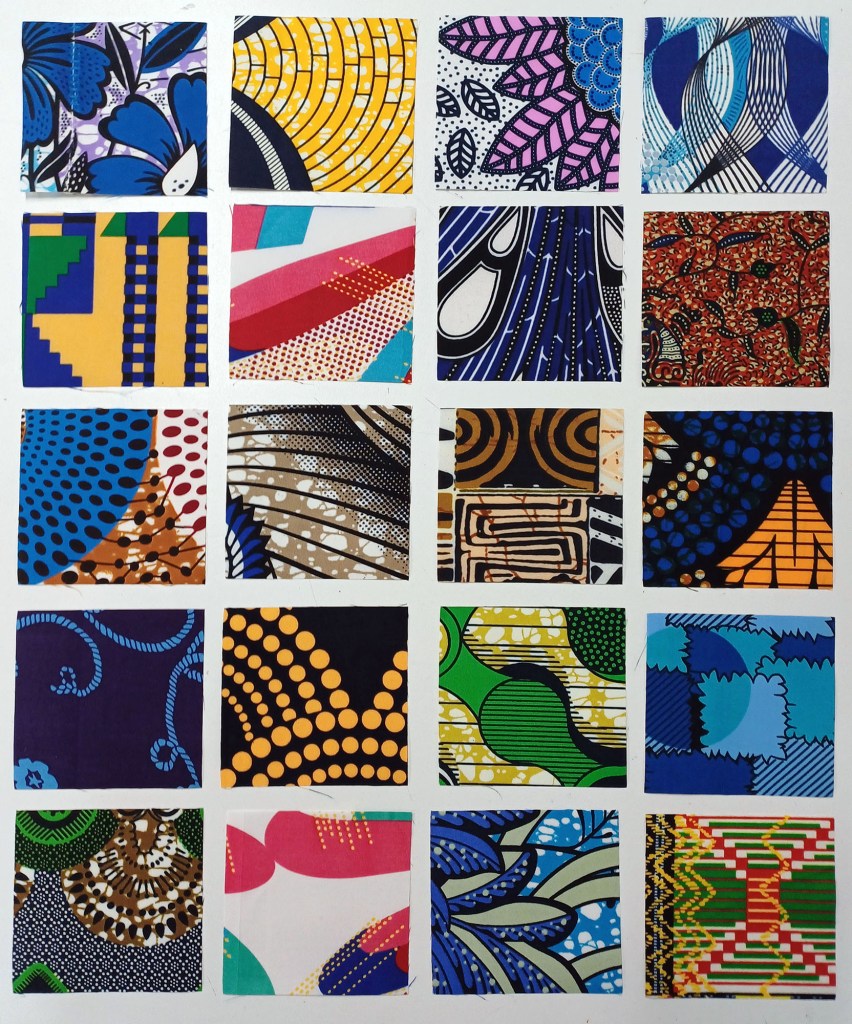
Inspired by his work, I bought a selection of “African” fabric squares from a well-known online retailer and began experimenting by arranging the different colours and patterns together. When I came across Shonibare’s Double Dutch, I laid the squares out in a grid that echoed the composition of the piece.
However, something still felt as though it was missing. Traditional African Dutch wax fabrics are created using a wax-resist process, but the samples I had bought were modern printed cottons that had never been near wax. They had the appearance of the fabric but lacked the physical qualities and character that I associated with it.
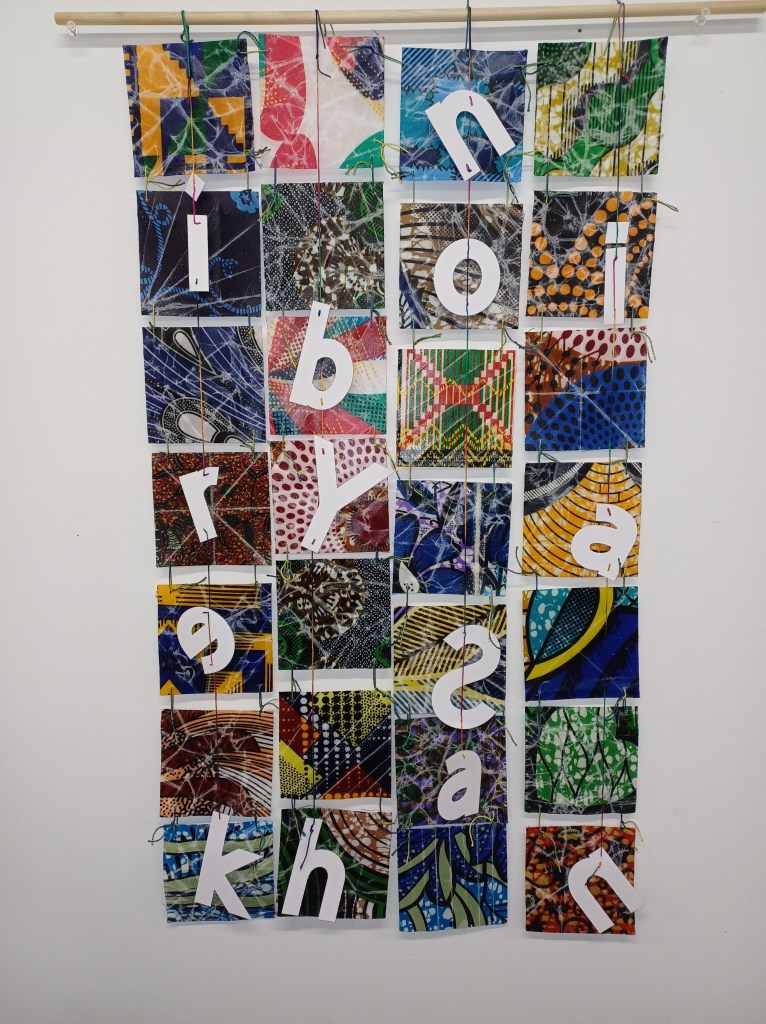
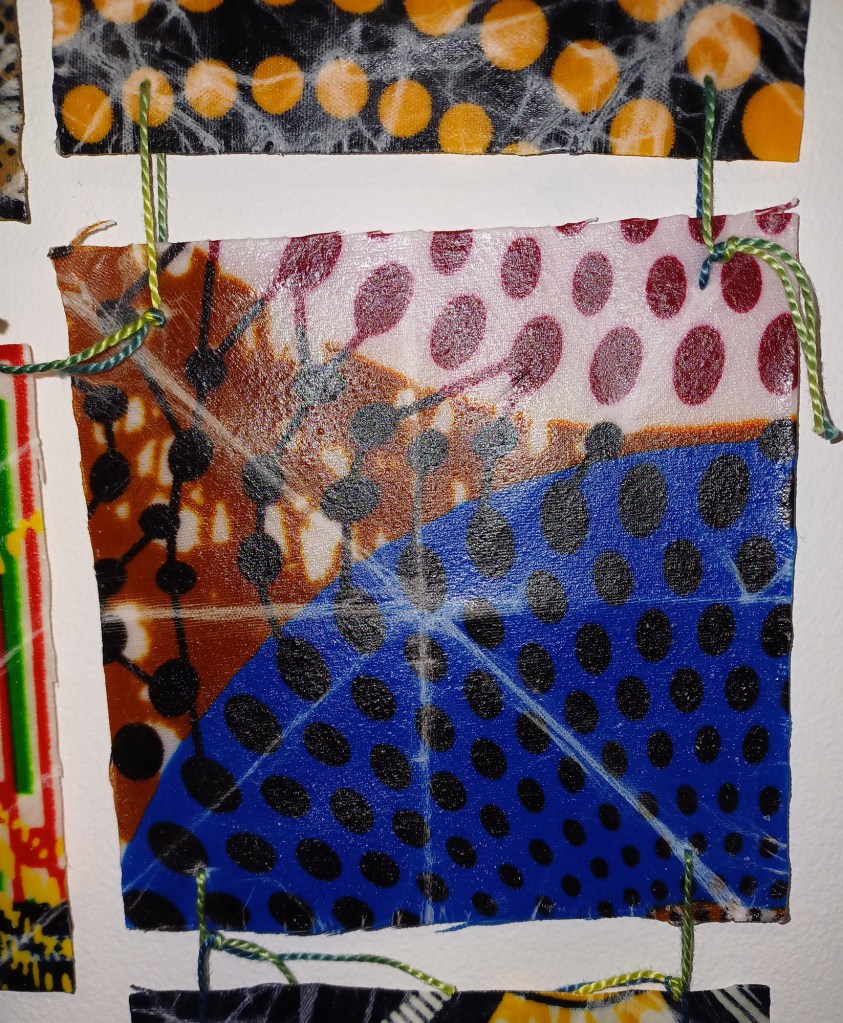
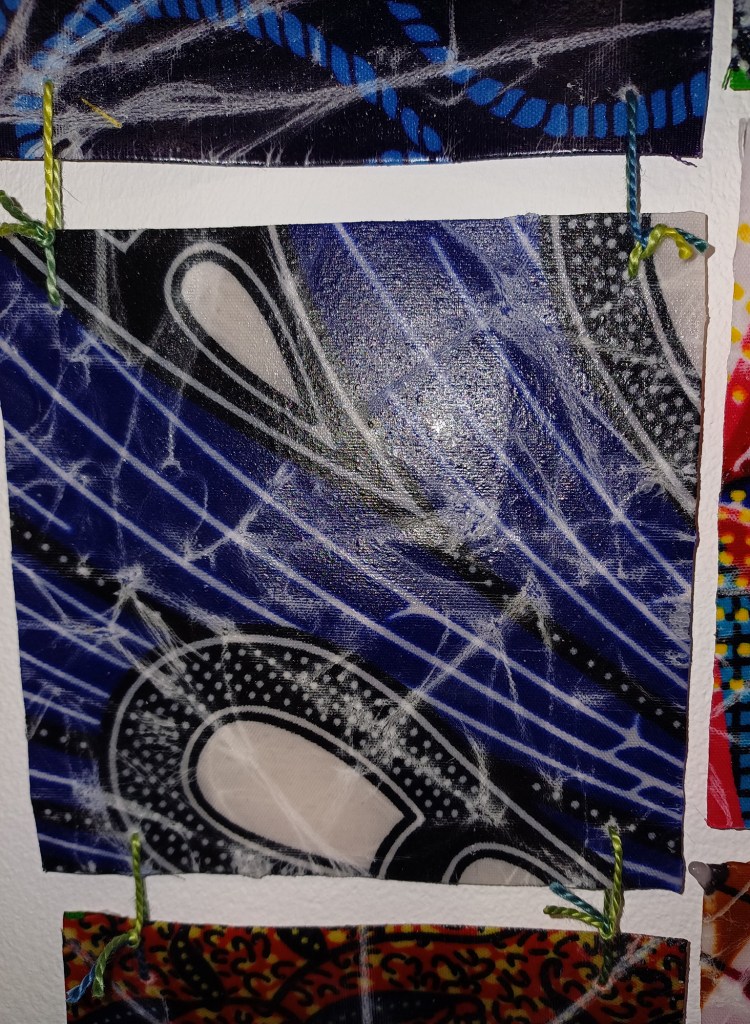
After thinking about it for some time, I decided to introduce that missing element myself by dipping each piece of fabric into wax. Once the wax had dried, I crushed and folded the fabric, allowing the wax to crack and create intricate lines across the surface. The transformation was immediate. The process altered both the look and the feel of the material, giving it a richness and texture that lifted it beyond the generic printed fabric it had been before.
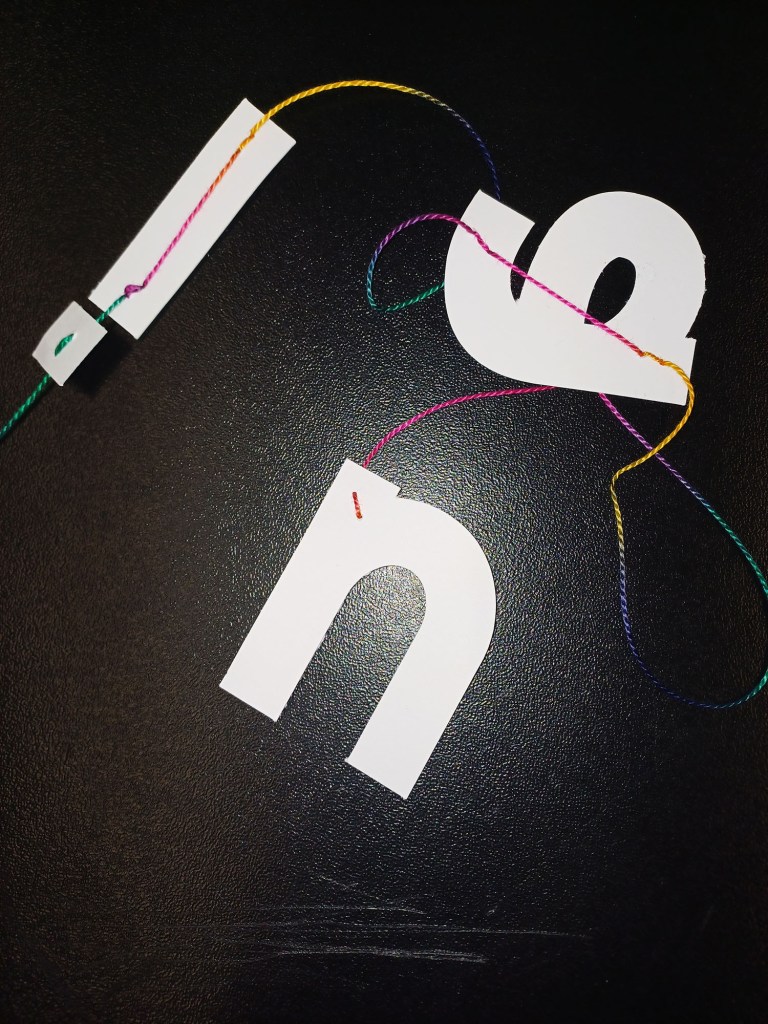
I then suspended the squares using strings of varying lengths and cut the name Yinka Shonibare from card to hang in front of them. I liked the sense of spontaneity the installation conveyed, even though every element had been carefully positioned to achieve the overall composition.
When Helen curated the exhibition, she placed the work in the corner of the gallery. The position allowed the lighting to cast dramatic shadows across the wall, transforming the hanging into something far more sculptural. Instead of reading as a flat, two-dimensional arrangement of fabric, it became a three-dimensional installation that extended beyond its physical form.
That experience taught me that curation is an art in itself, one that is often overlooked by people viewing an exhibition. Helen’s understanding of space and light elevated the work in ways I had never anticipated and revealed possibilities that I had been unable to see while making it. After only half a year at university, I was beginning to realise that the more I learned, the more aware I became of just how much I still had to discover.
 Cheryl Nelson Costumes