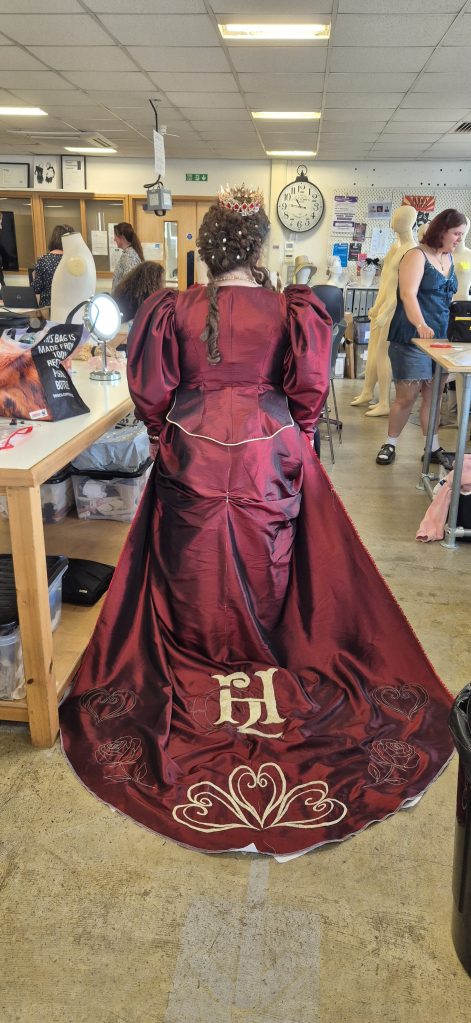
Once the design was established, the more challenging stage began: turning the concept into a functioning costume.
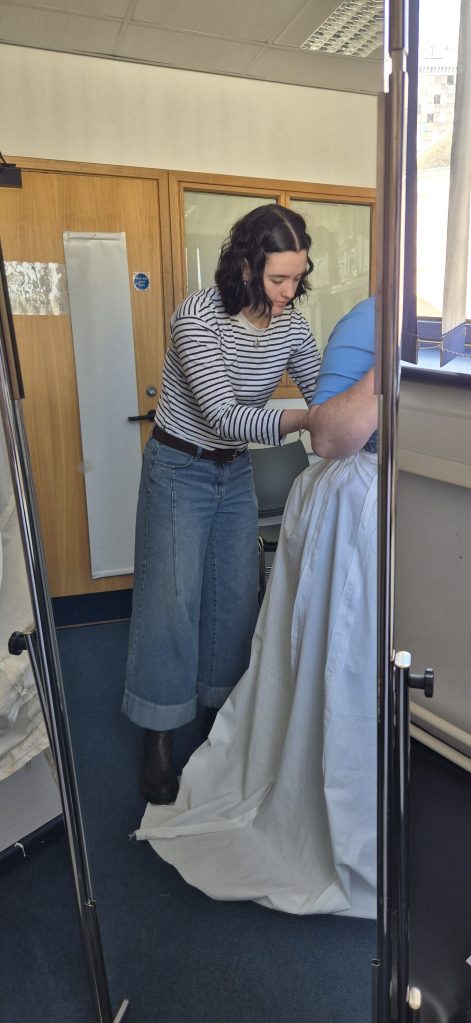
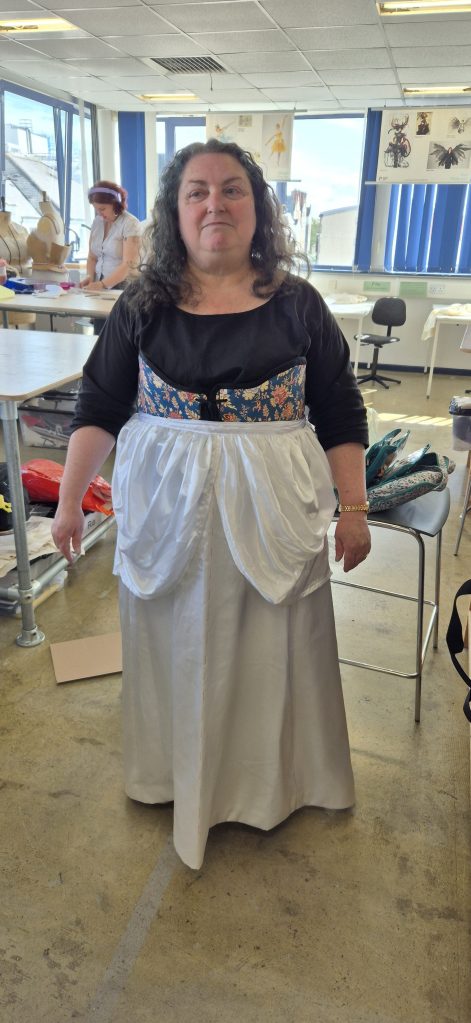
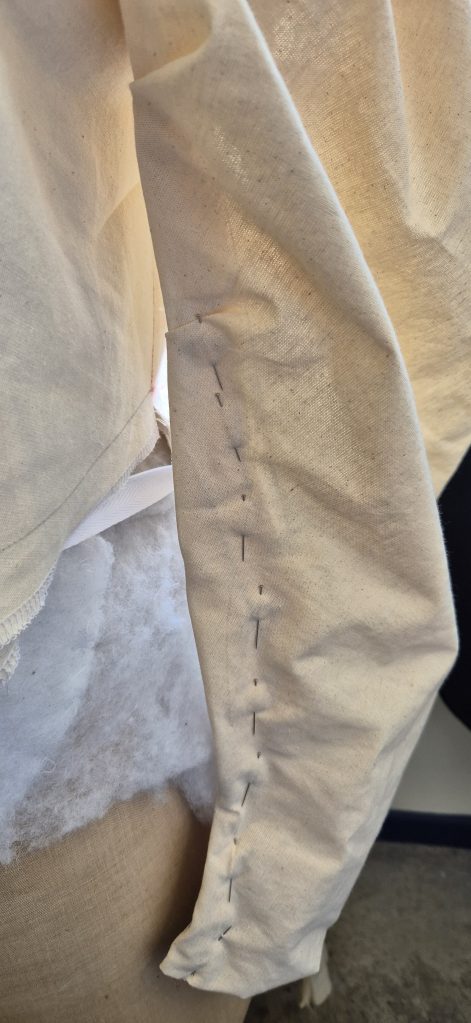
The first difficulty was adapting the university’s standard pattern blocks. As I am considerably larger than the available size 10 blocks, these required substantial alteration before I could begin developing the toile and fitting it to my own measurements. This became an important part of the process, as it made me consider how standardised pattern blocks can limit the development of costumes for bodies outside their intended size range.
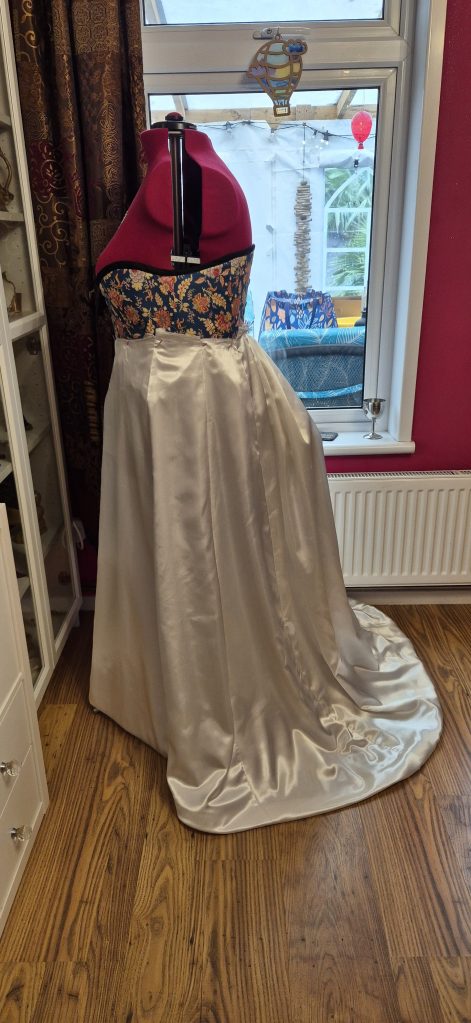
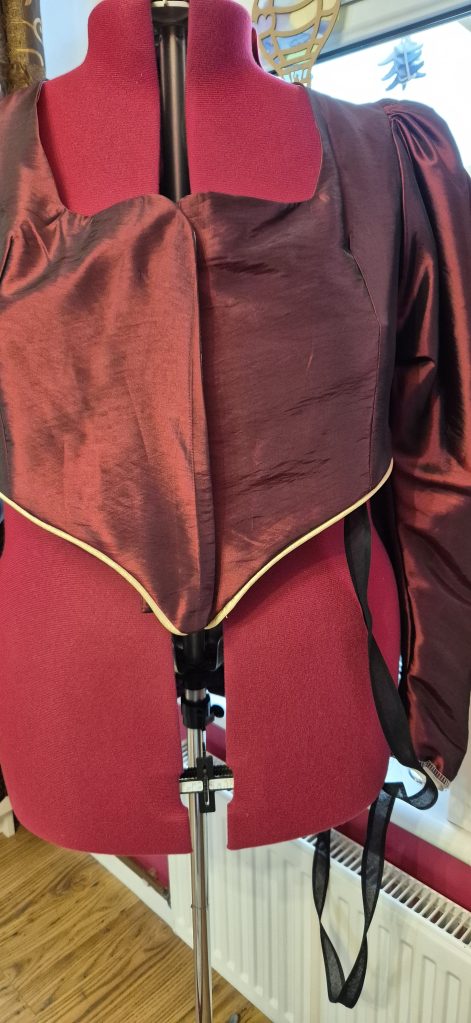
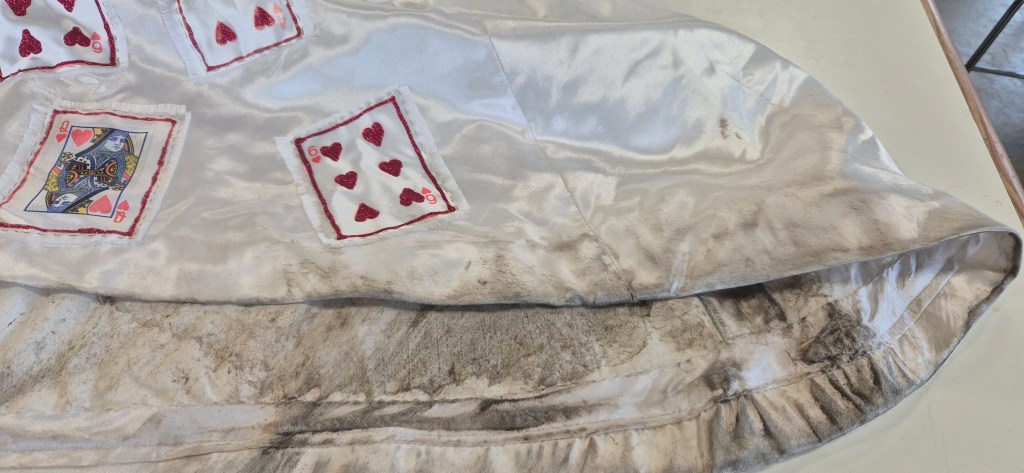
Fabric presented another practical challenge. As the university was retaining the costumes, rather than us keeping them ourselves, the fabric was supplied to us. Unfortunately, there was not enough fabric available for the scale of skirt we had designed. This was particularly problematic because the full silhouette required a considerable amount of fabric. Katie came to our rescue by donating some old satin sheets belonging to her grandmother, which gave us the additional material we needed. Fortunately, we had also managed to find a beautiful red taffeta when the fabric store was opened to us, so the main components of the costume could still be produced using appropriate fabrics.
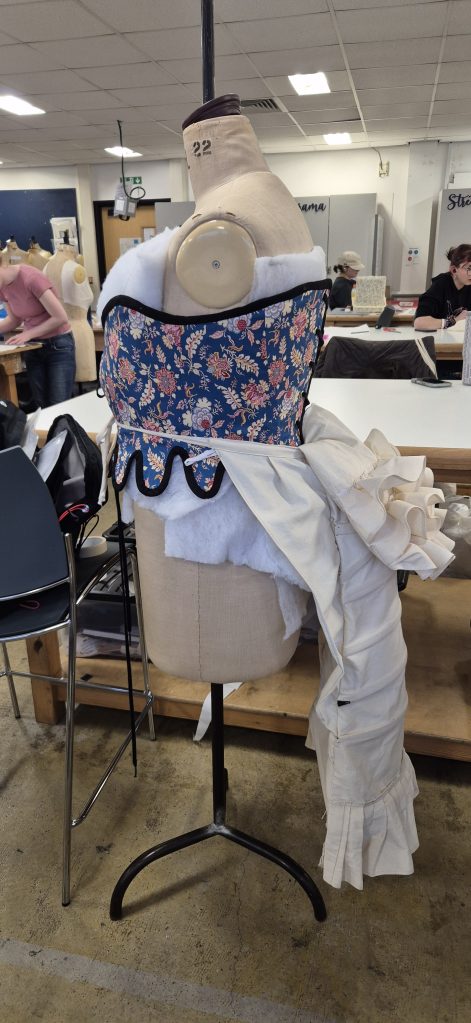
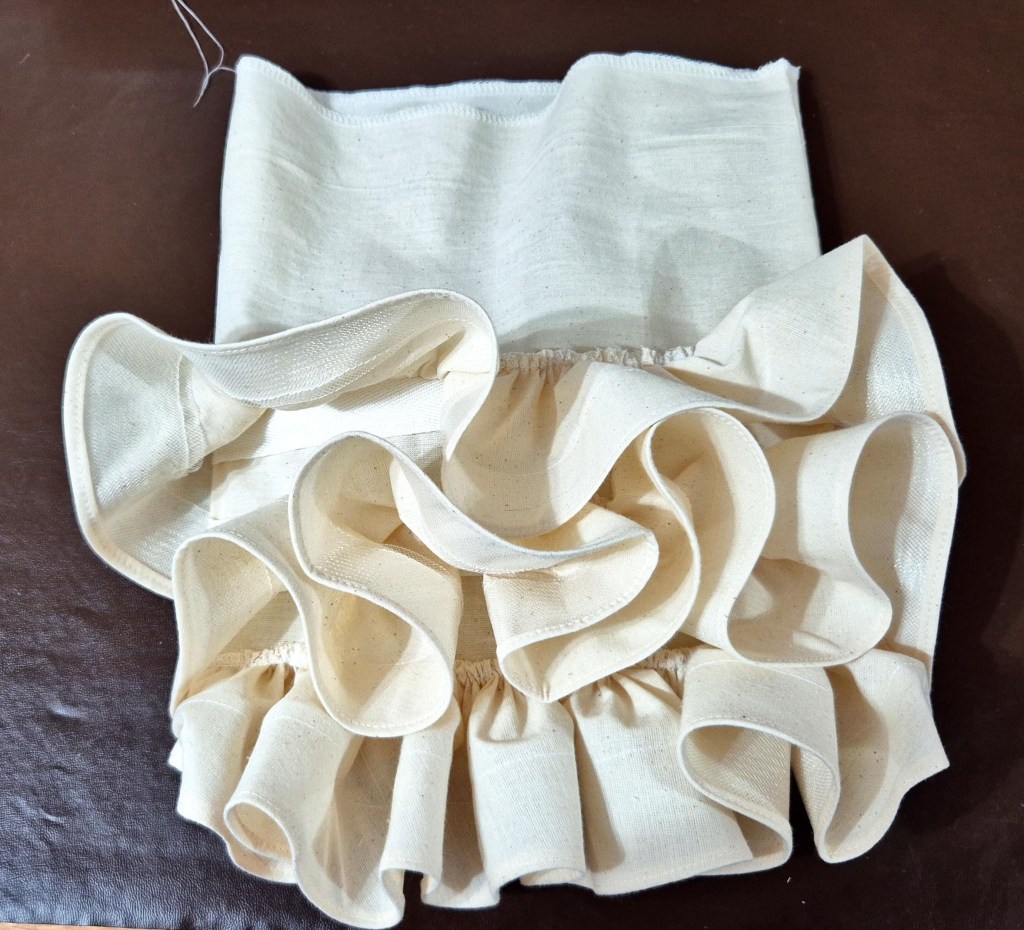
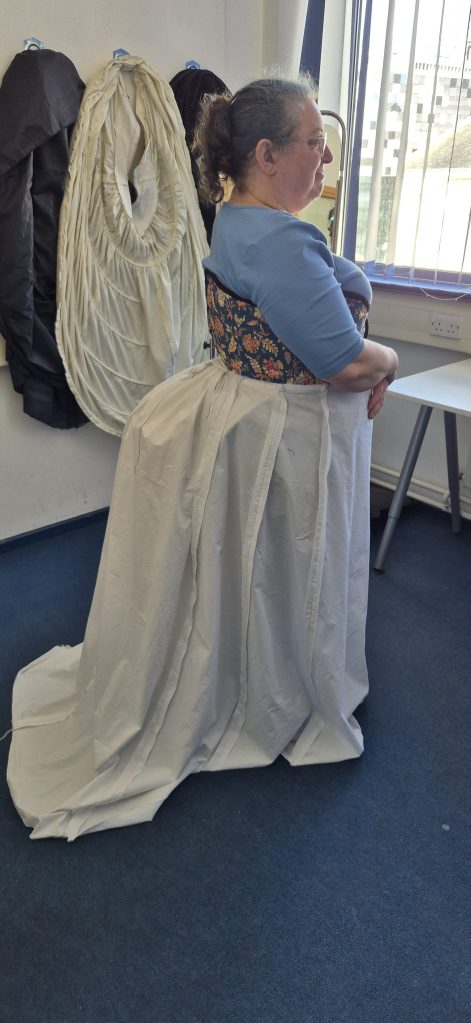
For the underpinnings, I decided to use my own 18th-century corset. We knew there would not be sufficient time to construct a new 19th-century corset and the university corsets available to us were considerably too small. The available bustles were also much smaller than the silhouette I wanted to achieve, so I constructed an additional bustle pad to increase the volume. I wanted the silhouette to have a deliberately exaggerated posterior, which suited the theatrical nature of the character.
Katie took responsibility for constructing the bodice while I concentrated on the skirt. We worked together to resolve some of the construction problems, including how to make the leg-of-mutton sleeves stand away from the body. We achieved this using tulle to provide additional structure. We also decided to remove the side swags from the original design because, during construction, it became apparent that they were not contributing to the overall effect and instead interrupted the lines of the costume.
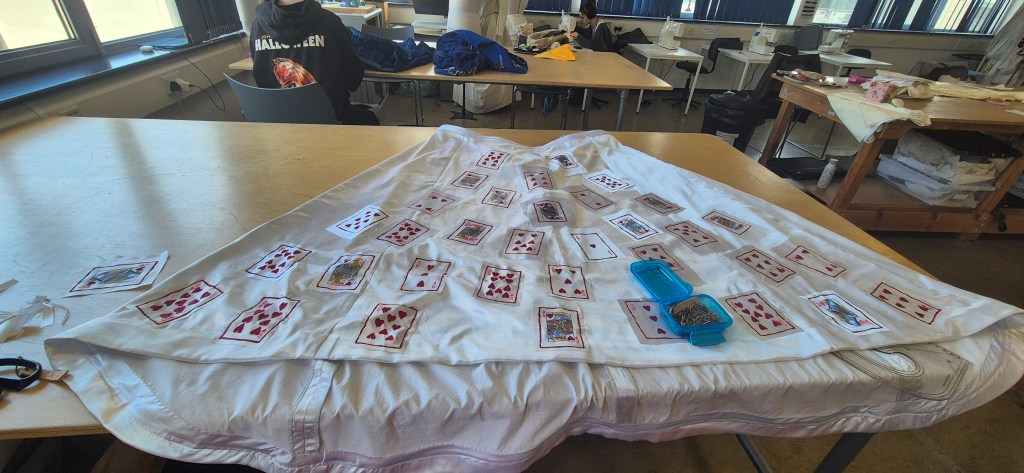
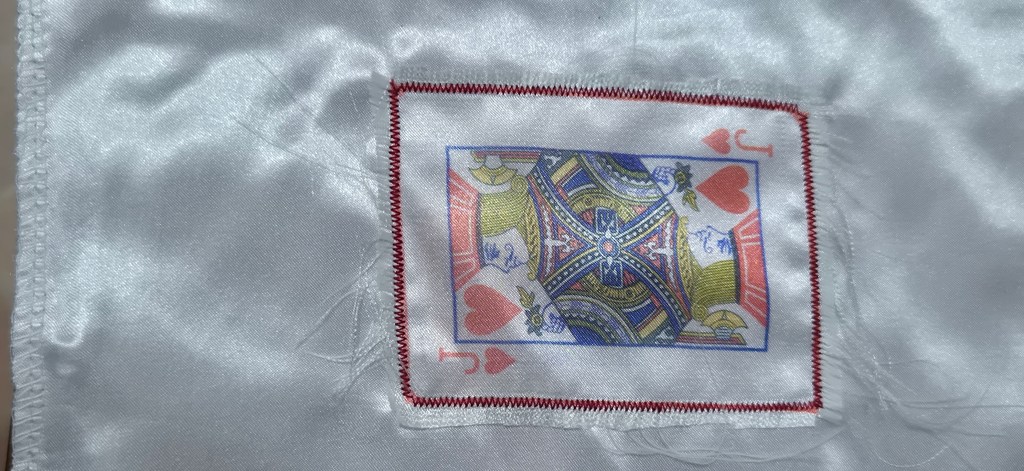
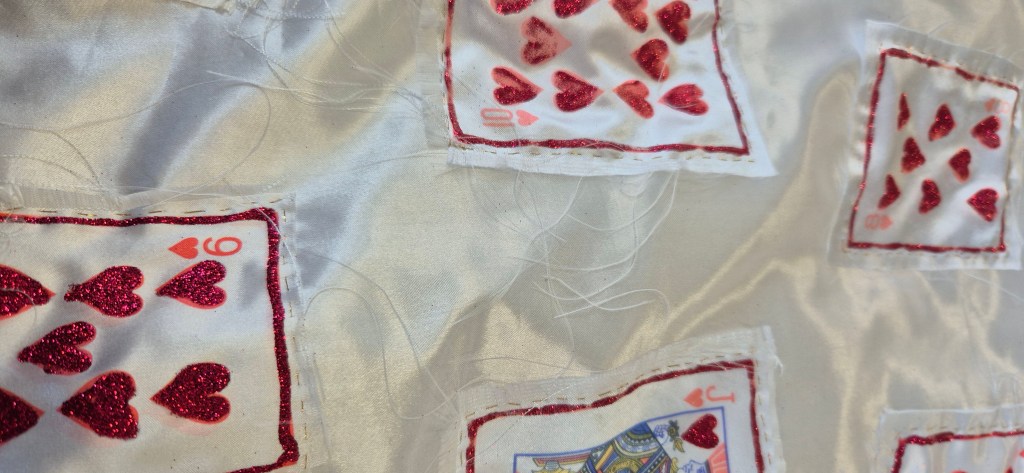
The decorative elements also became an opportunity to experiment. I used sublimation printing to create the playing cards, which I then hand-stitched onto the skirt using gold thread. I deliberately frayed the edges of the cards and added fabric glue and glitter to create a slightly theatrical, imperfect finish. In retrospect, I would probably use machine embroidery for this element in future, but because the character had a deliberately exaggerated, almost pantomime quality, I felt the handmade appearance was appropriate.
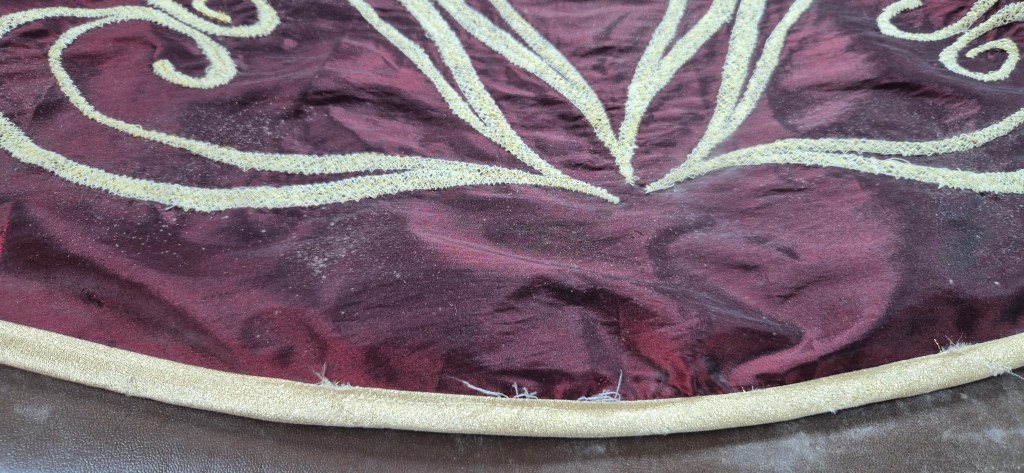
The character’s backstory also influenced the construction and ageing of the costume. We decided that our Queen of Hearts was angry because she felt ignored. The angrier she became, the more people ignored her, creating a cycle that became increasingly destructive. Her clothing reflected this deterioration. It was never properly cared for, so small tears and areas of dirt accumulated, stitching began to fray and repairs were neglected. We wanted the costume to feel slightly imperfect, as though it had gradually deteriorated alongside the character.
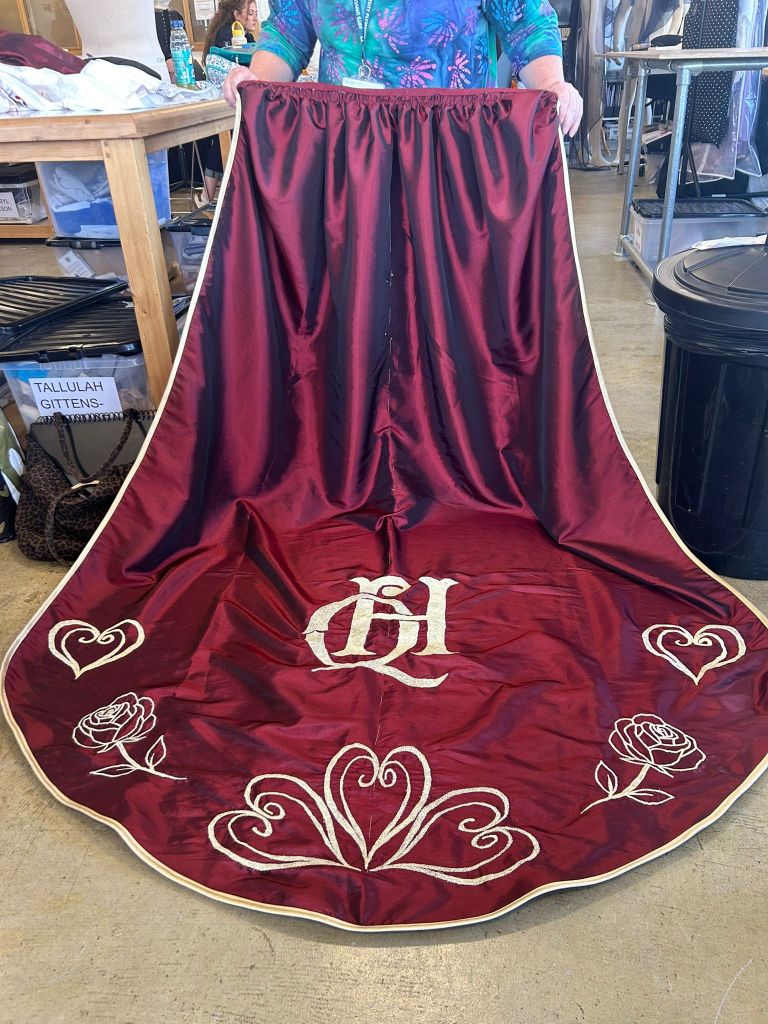
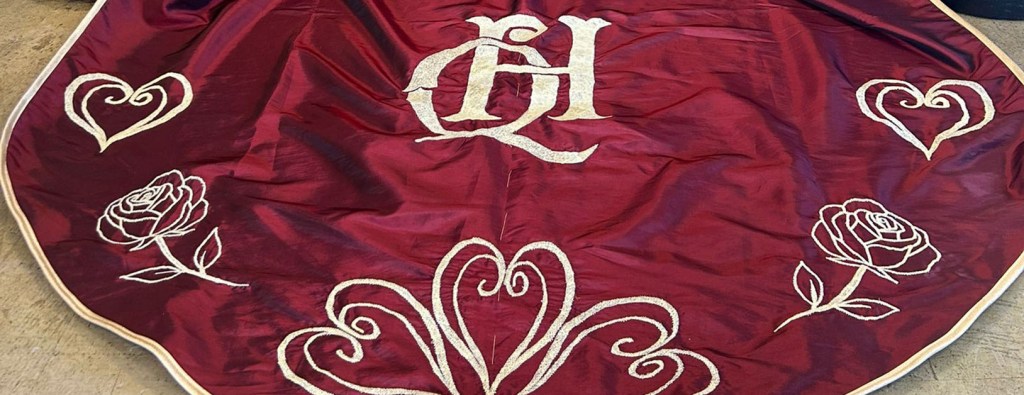
The embroidery on the train was too large and complex to transfer easily, so we decided to complete it using freehand machine embroidery. Katie had never used this technique before and was interested in learning, so I showed her how to approach it. She then spent several hours completing the embroidery. We finished the train with faux horsehair along the lower edge and gold bias binding to reinforce the theatrical quality of the design.
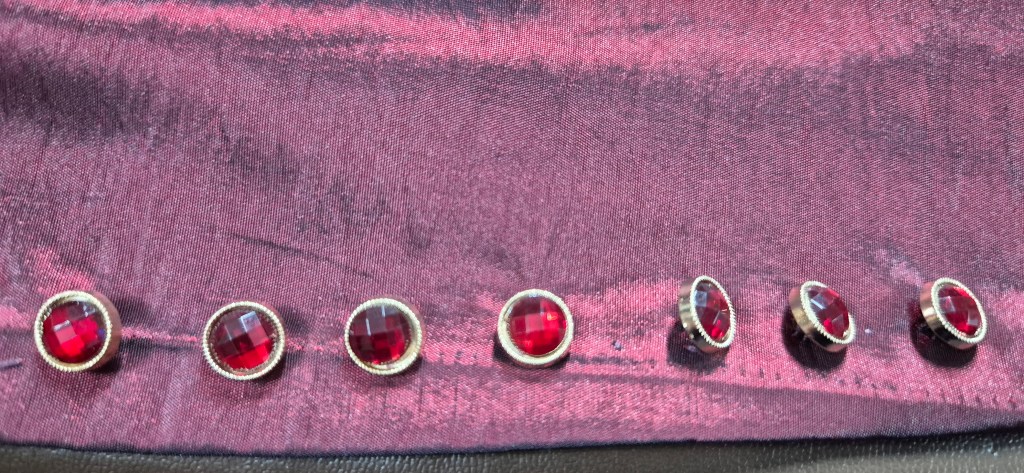
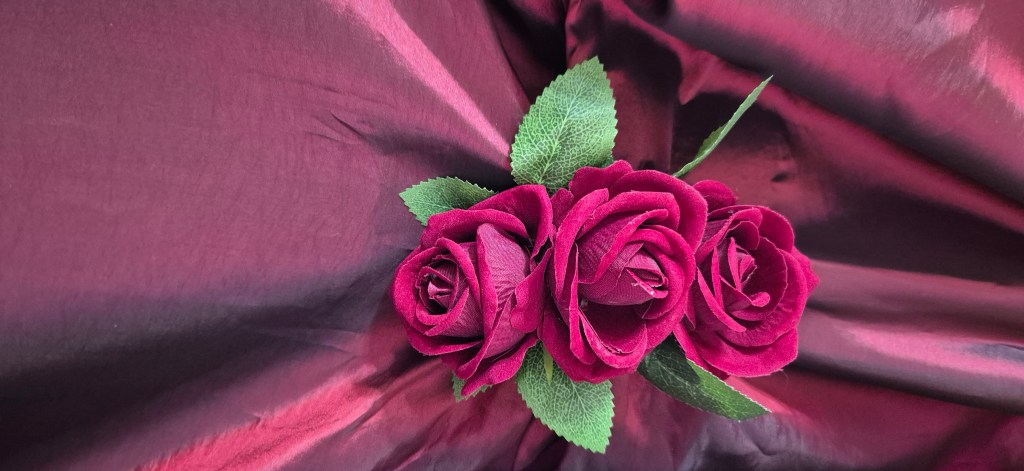
For the roses, we used commercially produced fabric roses, cutting off the flower heads and stitching them directly onto the costume. This was primarily a time-saving decision. With more time, I would have preferred to construct the roses from the remaining taffeta, which would have produced a more cohesive finish and allowed us greater control over their size and shape.
We also experimented with ageing the costume. We broke down the fabric around the hems to suggest the accumulation of dust and dirt, but the effect did not initially resemble the natural ageing I had seen on my own historical type clothing. In the end, a walk outside on wet pavements produced a much more convincing result! Interestingly, the taffeta resisted most of the natural marking, while the artificial marks created in the costume department remained. Although this was not the planned method, it provided a useful practical lesson in how different fabrics respond to dirt, moisture and attempts at ageing. I now know that this particular fabric is remarkably resistant to natural staining, which is useful information for future costume projects.
Looking back, this costume taught me almost as much through the things that did not work as through those that did. It was my first costume-making project at university and it is important to remember that the final design was also a collaborative compromise rather than entirely my own idea. My previous experience had largely been in creating historically accurate costumes, so adapting my approach to a more theatrical and deliberately exaggerated character was a significant change. I found it difficult at times to step away from my instinct to make things historically correct and instead consider what might communicate the character more effectively.
I also recognise that the collaborative process could have been more balanced. Katie was an excellent and conscientious partner, but I think she sometimes found it difficult to challenge my decisions. There is an interesting dynamic in working with someone considerably older than yourself and I suspect I may have unintentionally made it harder for her to disagree with me. This is something I need to be more aware of in future collaborations.
Ultimately, I am pleased with what we achieved, particularly given the limitations of time, materials and experience. However, if there is one thing I would take forward from this project, it is the need to be more adventurous. I need to be willing to move further away from what I already know, accept that something does not always have to be historically accurate and to allow the character and the concept to dictate the design rather than my own habits.